Basira
Your business in the real world, the way a first-time customer sees it.
Photograph your storefront, your interior and your product, and get a report on what actually reaches the customer and what does not.
Before you shoot: your photos are sent to an external AI model for analysis and deleted after thirty days. Do not photograph the faces of staff or customers, or any document carrying personal data.
You are on a computer and the camera is in your pocket
Create a session code and scan it with your phone camera. Basira opens on your phone in the same session, so you shoot and finish there, and the report appears on this screen as soon as it is ready.
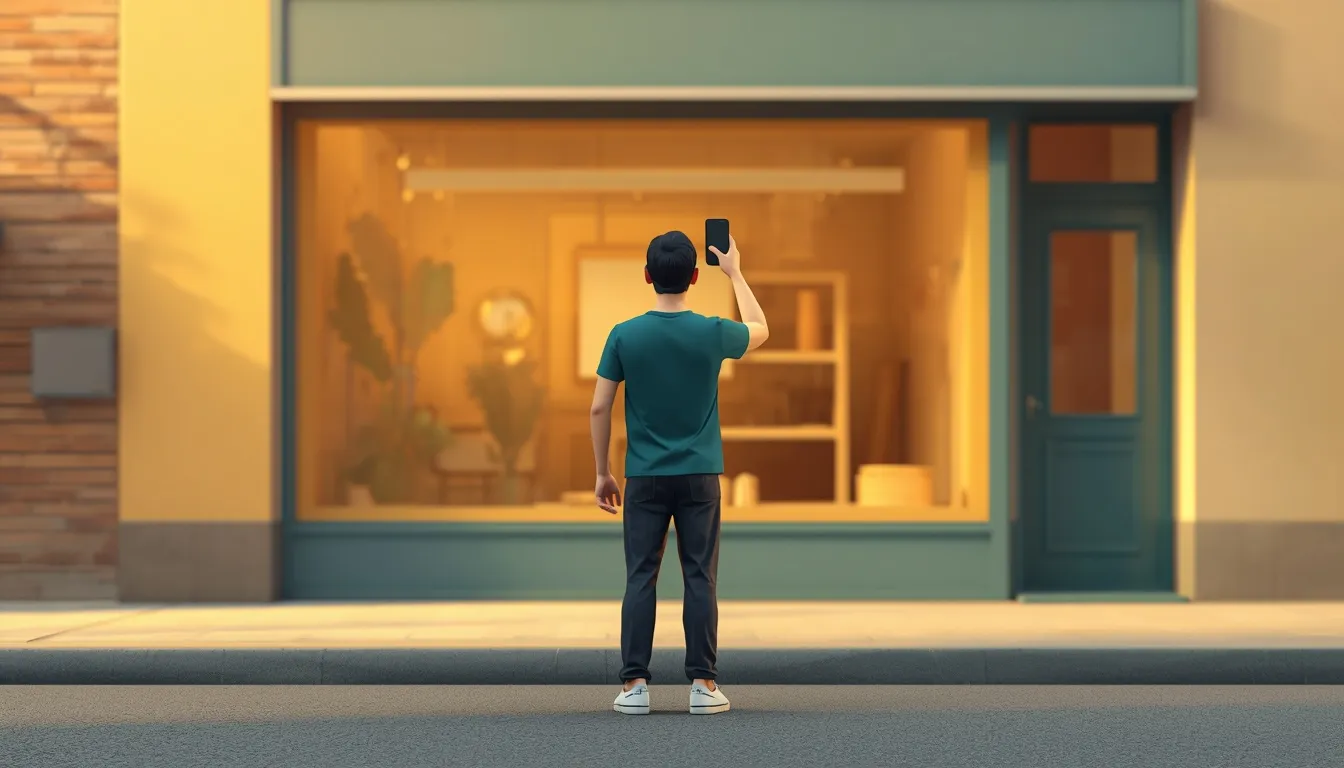
The most important photo in the report. It is where the tool reads what a passer-by understands about your place before walking in.
 Example
- Stand on the opposite pavement, not right at the door.
- The whole sign and the door inside the frame, not a close-up of the sign alone.
- Shoot in daylight if you can, with the sun behind you.
Read against the storefront to measure consistency: does the interior deliver what the sign promised?
 Example
- Stand at the door facing in, the same angle as someone entering for the first time.
- Not one corner, but the scene that meets them the moment they step in.
- Set the lighting the way it is at your busiest hour, no brighter and no dimmer.
This is where the tool measures how clearly what you sell is presented: the name, the price, and what sets it apart from whatever sits beside it.
 Example
- Pick what you actually sell most, or your current offer board.
- Shoot it where it sits on the shelf, not in your hand and not on a white background.
- If a price sits beside it, keep the price in frame.
Each one opens an extra axis in the report. Leaving them empty does not stop the analysis and is not held against you.
 Example
 Example
 Example
These three are read alongside the photos: the name is compared with what is on the sign, and the type and city set what is expected of a place like yours.
The same storefront scores differently on a main road and inside a mall. And your goal decides which items come first in the action list.
None of this shows up in a photo, and without it the report may say a service is missing when it exists. Leaving a field empty is not held against you: the item is simply recorded as unknown.
A recurring question is the thing your place should answer before anyone has to ask. It is the most useful field in the whole form.
Your customer does not see your business piece by piece
You see the place every day, so you stop seeing it. A new customer takes it in all at once, in about ninety seconds, and forms a view before speaking to anyone. Basira reads the four touchpoints together and judges how well they agree.
Storefront and surroundings
What a passer-by can read from the pavement, what sits either side of you, and where your visitors arrive from.
Inside
Does the interior deliver what the sign promised? Layout, lighting, clarity of sections and internal signage.
Product and material
Does the product carry your name? Is the price visible? And does your printed material match the same identity?
Google listing
The impression that comes before the visit. Rating, review count, the photos on display and how clear the description is.
What you see, and what he sees
Most shop problems are not in the product or the price. They are in a fact that is obvious to the owner and completely absent for the person standing outside.
You
- You know exactly what you sell
- You know the offer runs to the end of the month
- You know the upper floor is part of the shop
- You know the number on the sign works on WhatsApp
- You know delivery is available
The person at your door
- Sees a name that explains nothing
- Sees no offer written anywhere
- Assumes the shop is one room
- Sees a number with no hint of how to reach you
- Does not know delivery exists, so walks on
Ten questions the report answers
Every answer comes from a photo in front of you, with the place in the frame it came from. And anything the photo cannot settle is written down as exactly that, rather than guessed.
Can a passer-by tell what you sell within two seconds?
A name with no description leaves the shop unreadable to anyone who does not already know it.Is the name on the sign the same as your registered name?
If it differs from your Google listing, people searching for you lose the thread before they arrive.Is your contact detail visible and readable from a distance?
A small number on reflective glass is a number that does not exist in practice.Is there one reason to walk in today?
An offer, something new, or a written advantage. Not just a sign with the shop name on it.Does your sign read in the language your customers actually use?
A single-language sign on a bilingual street loses half the people walking past.Does your surrounding set you apart, or swallow you?
From the wider scene: how crowded the signage around you is, and whether anything separates you from your neighbours.Does the interior deliver what the storefront promised?
A break in identity between outside and inside costs trust for no visible reason.Can a customer understand your product from the packaging alone?
The name, the price, and what makes it different from whatever sits beside it.Does your printed material carry the same identity and a clear way to reach you?
A card or menu styled differently from the sign reads as though it belongs to somewhere else.Does your Google listing look like the real place?
Old photos or a thin description make people hesitate before they ever set out.Five stages, and the fifth is the one that matters
The value is not in the first report. It is in the difference between the first and the second. That is why Basira keeps your photos as thumbnails and asks you to shoot from the same angles next time.
Capture
Three core photos and three that sharpen the report, straight from your phone or from your gallery.
Analyse
Each photo is read on its own, then all of them are read together to measure how well they agree.
Report
Findings tied to the photos they came from, a calculated score, and actions ordered by priority.
Act
Start with high impact and low effort. Most items need no budget at all.
Measure again
After six to eight weeks, from the same angles, so the comparison shows in both photos and numbers.
Four bands, and the score is calculated rather than estimated
The model answers visible facts with yes, no, or unclear. The score is then calculated in code using fixed weights. Anything it could not see is not counted as zero: it drops out of the calculation and the reason is stated.
What Basira does not do
A tool that overstates itself is worse than no tool. These limits are written down before you use it.
- 01
It does not measure your position on Google Maps or in search results.That needs data no photo can carry.
- 02
It does not know your sales, your customer count, or your conversion rate.Any number of that kind in a photo-based report would be invented.
- 03
It does not analyse your competitors or rank the market around you.The wider scene is read for where you sit in it, not to assess anyone else’s shop.
- 04
It does not judge the quality of your product or whether the price is right.Only how clearly the product is presented.
- 05
It does not read fine print from a panorama.Very wide images lose detail when resized, so they are read for the scene rather than for the sign.
- 06
The model does not award scores itself.It answers visible facts, and the arithmetic happens in code with fixed weights, which is what makes the second measurement comparable.
- 07
It does not keep your photos beyond thirty days.Thumbnails are stored with the report so it stays useful for comparison, then deleted.
- 08
It does not replace a site visit for anyone who needs one.It reads what is in the frame. A visit reads movement, noise, crowding and how people actually behave once inside.

Ashraf Azim — Digital Marketing Consultant and AI Tools Developer
I built Basira to use myself, with real business owners, before publishing it. It judges what appears in the photo, and tells you plainly what it could not see rather than filling the gap with a guess.
Before you start
How do I move from my computer to my phone?
Press create session code and scan it with your phone camera. Basira opens on the phone in the same session, so you shoot and finish there, and the report appears on the computer screen when it is ready.
If you opened the tool on your phone in the first place, you do not need the code at all. Just start shooting.
How do I take the wider scene photo?
From your phone camera app: choose panorama mode, stand facing your entrance, and pan slowly across. Then upload the result here.
A browser cannot capture a panorama on its own, which is why it is taken in the camera app and uploaded. If you cannot manage one, the report works without it.
What do the other photos need to look like?
An ordinary phone photo is enough. What matters is shooting the storefront from far enough back that the whole sign and the door are in frame, rather than a close-up of the sign alone.
Photos are resized inside your browser before upload, so they do not eat your data or slow things down.
Why ask me about things the photos already show?
Nothing here asks about what the camera can see. Every field is something a photo cannot carry: your real opening hours, the language your customers read, whether delivery exists, and the question you keep being asked.
Without them the report might report a service as missing when it is simply not visible.
Can I use it on a business I do not own?
The tool is meant for your own business. Photographing someone else’s premises and analysing it is not an intended use, and photography is restricted at some commercial sites.
What happens to my photos and my location?
Photos are resized and sent to an AI model for analysis. A thumbnail is stored with your report for thirty days so it remains useful for comparison, then deleted.
The location button only runs when you press it and grant permission, and the location is recorded with the report as a reference. Your name, email and phone number are never sent to any provider.
When should I measure again?
After you have acted on at least three items, and after six to eight weeks. Measuring sooner compares the same place with itself and tells you nothing.
Shoot from the same angles, otherwise you are comparing two different scenes rather than two states of the same place.
How is this different from the other tools here?
The other tools work on your digital presence: your website, your campaigns, and how AI models describe you. Basira is the only one that works on the physical place a customer stands in front of.
I can build one like it for your site
This tool was built from scratch, and the same service is available for your site: an interactive tool that analyses a visitor’s data and hands them a report, so you receive a qualified lead with the problem already described.
AI Tool Development